 (Image source: Gemini)
 You probably know that blueberries are good for you. It is the kind of health advice that has been repeated so often it almost feels like background noise. But here is the thing. Most people treat these little blue fruits as a casual snack or a muffin ingredient rather than what they actually are: a high-octane fuel for your brain.
If you are trying to stay sharp in a world that demands constant focus, you might want to look closer at what makes these berries tick. It is all about the antioxidants, specifically a group of compounds called anthocyanins. These are the pigments that give the berries their deep color, and they are basically a security detail for your neurons.
The Blue Powerhouse Why Your Brain Craves Anthocyanins
Think of your brain like a high-performance engine. It is constantly running, burning energy, and processing data. But that process creates heat and exhaust, which in biological terms we call oxidative stress. Over time, this "exhaust" can gunk up the works, leading to brain fog, slower recall, and that general feeling that your mental gears are grinding.
Anthocyanins are the cleanup crew. They cross the blood-brain barrier, which is a big deal because not many compounds can get past that gatekeeper. Once inside, they help neutralize the oxidative stress that tries to wear down your cognitive health. This isn't just about preventing damage, though. It is about optimization.
When you reduce that internal stress, your neurons communicate more effectively. Recent research has shown that these compounds can actually help restore processing speed in older adults, effectively turning back the clock on how fast the brain can handle information. So what does this actually mean for you? It means fewer "tip of the tongue" moments and more of that crisp, clear mental energy you need to get through a long day.
Concentrate vs. Fresh The Efficiency Equation for Busy Brains
You might be wondering why you can't just eat a handful of berries and call it a day. You certainly can, and they are delicious. But if you are looking for a specific cognitive result, consistency is your best friend.
Fresh berries are inconsistent. Depending on the season, where they were grown, and how long they sat on a truck, the actual antioxidant content can vary wildly. To get the therapeutic dose used in the most successful clinical trials, you would often need to eat about a cup of fresh berries every single day without fail. For most of us, that is a lot of grocery trips and a lot of fruit to wash.
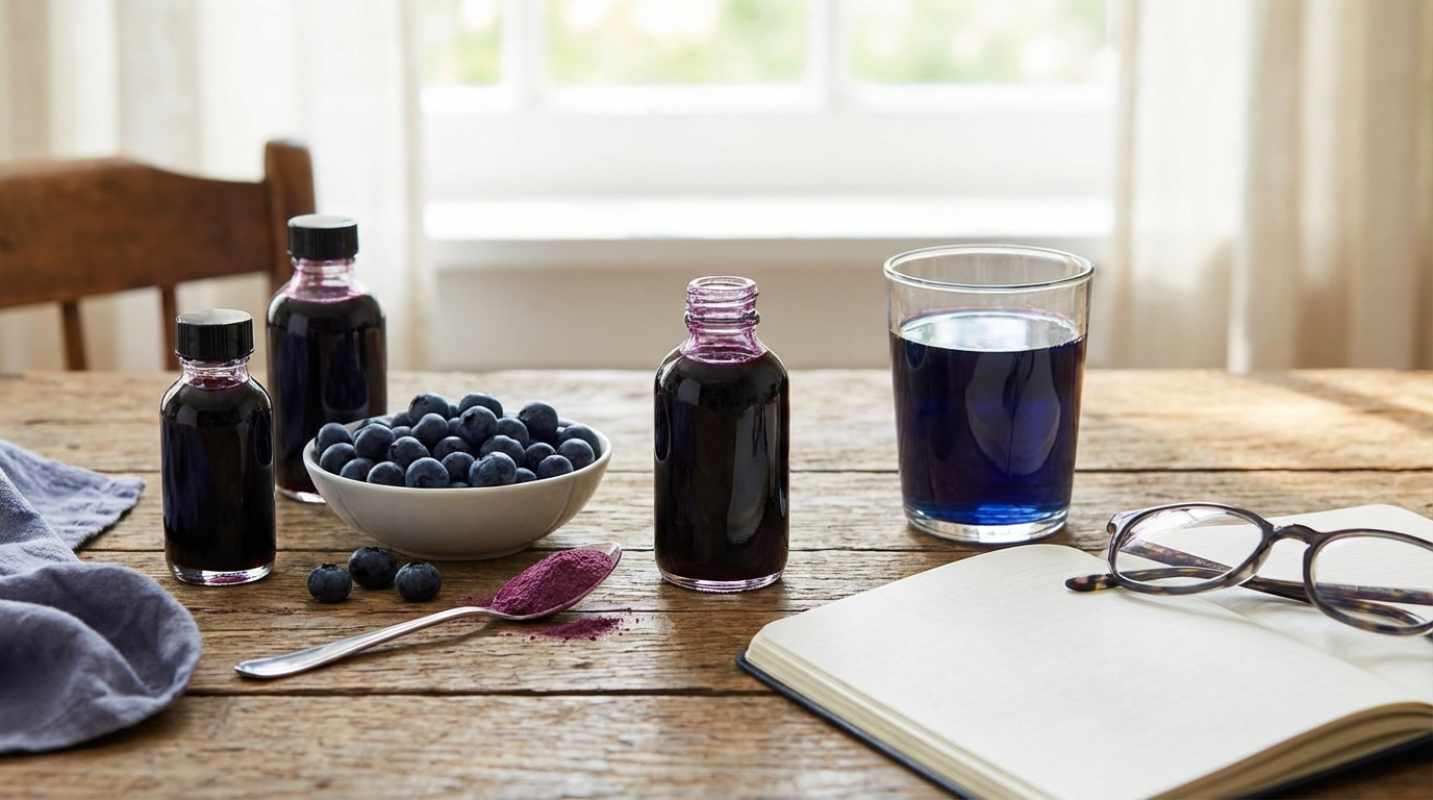
This is where concentrates and extracts come into play. A high-quality concentrate takes the active compounds from a massive amount of fruit and packs them into a small, manageable dose. It is the difference between drinking a gallon of weak tea and taking a concentrated shot of espresso.
Extraction processes have come a long way. The best methods today use low heat or freeze-drying to make sure the delicate anthocyanins don't get destroyed during processing. When you use a concentrate, you know exactly how many milligrams of the "good stuff" you are getting. It makes your brain health routine measurable and repeatable, which is the only way to see real long-term changes.
Decoding the Label What Makes a Best Blueberry Concentrate?
Walking down the supplement aisle can feel like a trap. Every bottle claims to be a miracle, but most of them are just expensive juice. If you want a concentrate that actually does something for your brain, you have to be a bit of a skeptic when reading the label.
First, ignore the ORAC score. Brands love to brag about this because it sounds scientific, but it is mostly a lab metric that doesn't always translate to how the human body uses the antioxidants. What you really want to look for is standardization.
Standardization is a guarantee that a specific percentage of the product is made of active anthocyanins. If a label says "25% anthocyanins," you are in business. If it just says "blueberry extract" without a percentage, you are basically guessing what is inside.
You also need to choose between wild and cultivated berries. This isn't just a marketing distinction. Wild blueberries (Vaccinium angustifolium) are smaller and tougher than the fat, watery ones you see in the supermarket. Because they have to survive harsher environments, they produce way more antioxidants to protect themselves. Experts generally agree that wild berries offer a much broader spectrum of beneficial compounds.
Finally, check for the "extra" ingredients. You don't need added cane sugar, corn syrup, or artificial flavors in your brain boost. A pure liquid concentrate should be tart and intense. If it tastes like candy, it is probably doing more harm to your blood sugar than good for your brain.
Top Contenders Evaluating Today's Leading Blueberry Concentrate Options (2026)
The market for cognitive supplements has shifted toward high-potency, standardized options. In 2026, we are seeing a clear divide between "general health" supplements and those designed for specific mental performance.
- ThinkBlue™ Patented Extract, This is currently the gold standard for anyone dealing with the afternoon slump. It is standardized to at least 35% polyphenols and 5% anthocyanins. A recent study found that a 222mg dose can significantly help you avoid that "post-lunch dip" in focus and executive function. It is a great choice if you need a sharp mental edge for work.
- AuroraBlue® Wildcreateed Complex, This uses a blend of Alaskan wild blueberries. These berries grow in extreme conditions, which results in a wider variety of anthocyanins than your standard berry. It is often found in high-end longevity formulas because it provides a more complete nutrient profile for long-term neuroprotection.
- Standardized 25% Anthocyanin Extract, This is the workhorse of the industry. Many reputable brands like Pure Encapsulations use this specific potency because it matches the levels used in the foundational memory research. It is reliable and usually more affordable than the patented versions.
- 100% Liquid Concentrate, If you hate swallowing pills, a liquid concentrate is the way to go. Brands like Dynamic Health offer unsweetened versions that provide roughly 387mg of anthocyanidins in just two tablespoons. Clinical trials have shown that this kind of daily dose can actually increase blood flow to the gray matter in your brain.
Incorporating these into your life is easy. You can stir a liquid concentrate into your morning water or drop a scoop of powder into a smoothie. The key is to treat it like a daily ritual rather than a "whenever I remember" habit.
Future-Proofing Your Gray Matter
One of the most important things to understand about blueberry concentrates is that they aren't a one-hit wonder. Although some extracts like ThinkBlue can give you an acute boost in focus within a few hours, the real magic happens over time.
Think of it as a long-term investment in your cognitive infrastructure. Most clinical reviews suggest that while you might feel sharper within a week, the structural changes (like improved blood flow and better memory recall) usually take about 12 to 24 weeks of consistent use. It is a slow-burn benefit that builds up as your brain stays protected from daily oxidative wear and tear.
Current research is even looking into how these extracts might offer neuroprotection against more serious age-related decline. We are seeing more evidence that the vascular benefits (how well your blood moves through those tiny vessels in your head) are directly linked to how well you can remember where you left your keys or what was said in that meeting three days ago.
So, is it worth adding a blueberry concentrate to your routine? If you value your mental clarity and want a proactive way to manage your brain health, the answer is a pretty resounding yes. It is a simple, science-backed way to give your brain the defense it needs. Just make sure you are picking the high-potency, wild-sourced stuff. Your future self will definitely thank you for the boost.
This article on zenugen.com is for informational and educational purposes only. Readers are encouraged to consult qualified professionals and verify details with official sources before making decisions. This content does not constitute professional advice.