 (Image source: Gemini)
 Have you ever stopped to think about the fact that you're basically a walking, talking apartment complex? Inside your gut lives a bustling city of trillions of bacteria, fungi, and viruses. This is your microbiome, and just like any major metropolis, its health depends on who lives there and what they're doing. If you have a wide variety of "citizens" doing different jobs, the city thrives. If only one or two types of bacteria take over, things start to fall apart.
In the world of gut health, we call this variety diversity. It's the metric that keeps researchers up at night because it's linked to almost everything. Your immune system uses these microbes as a training ground to learn the difference between a harmless peanut and a dangerous virus. Your brain relies on them to produce neurotransmitters that dictate your mood. Even your digestion is a team effort where different strains break down different parts of your dinner.
So what happens when that diversity drops? You end up with a state called dysbiosis. It's like having a city where the power grid is down, the trash hasn't been picked up, and a few "uninvited guests" have started causing trouble. You might feel bloated, sluggish, or just "off." Recent data from early 2025 suggests that low diversity is a major driver behind chronic inflammation, which is why everyone is suddenly obsessed with how to invite more good guys to the party.
Prebiotics vs Probiotics Understanding the Difference
You've probably seen a million yogurt commercials talking about probiotics. It's easy to think they're the only game in town, but focusing only on probiotics is a bit like trying to fix a crumbling bridge by sending in a few more delivery drivers. Probiotics are the temporary visitors. They come in, do some good work, and usually leave within a few days. They don't typically set up permanent camp in your gut.
Prebiotic fiber is different. Think of it as the needed fertilizer or the infrastructure investment for your native good bacteria. These are specialized plant fibers that you can't digest, but your "good" microbes absolutely love to eat. When you take a prebiotic supplement, you aren't just adding new residents. You're feeding the billions of beneficial bacteria that already call your gut home.
If you only take probiotics without giving them the "food" they need to survive, you're missing the bigger picture. By 2026, the consensus among experts is that prebiotics are the foundation of long term gut resilience. They provide the fuel that allows your existing microbiome to expand its reach and protect you from the inside out. It's the difference between a quick fix and a sustainable ecosystem.
Decoding the Supplement Shelf Top Prebiotic Fiber Sources
Walking down the supplement aisle can feel like trying to read a foreign language. You'll see acronyms like FOS and GOS and wonder if you've accidentally stumbled into a chemistry lab. Let's break down what's actually in those bottles so you can choose what works for your unique system.
Inulin and FOS The Popular Contenders
Inulin and Fructooligosaccharides (FOS) are the most common prebiotics you'll find. They're usually derived from chicory root or agave. They're incredibly effective at boosting Bifidobacterium, which is a major player in metabolic health. But they're fermented very quickly by your gut bugs. This rapid feast can lead to some "digestive music" (gas and bloating) if you jump in too fast. If you have a sensitive stomach, you'll want to start with a tiny dose.
GOS The Better Tolerated Powerhouse
Galactooligosaccharides (GOS) are the rising stars of 2026. Unlike inulin, GOS is fermented a bit more slowly and is often much easier on the stomach. Recent meta-analyses from 2025 show that GOS is particularly good at boosting Akkermansia muciniphila.⁵ This specific strain is like the "security guard" of your gut lining, helping to keep your intestinal barrier strong and reducing overall inflammation.
Resistant Starch The Hardy Traveler
Then there's resistant starch, found in things like green banana flour or unmodified potato starch. It gets its name because it "resists" digestion in your small intestine and travels all the way to the large intestine. Once there, it becomes a feast for butyrate producing bacteria. It's a great option if you're looking to support the actual physical structure of your colon.
Top Recommendations
When you're looking for a supplement, the "gold standard" is now human clinical data. You want a product that doesn't just list ingredients but has been tested to show it actually changes the microbial space.
The Science of Seeding How Prebiotics Boost Microbiome Diversity
The way prebiotics work is actually pretty fascinating. It's a process called selective fermentation. Your gut bacteria eat the fiber and, in return, they produce things called Short-Chain Fatty Acids (SCFAs). Think of SCFAs as the primary "currency" of your gut health. The most important one is Butyrate, which is the MVP of the microbial world.
Butyrate provides the energy for the cells lining your colon. Without it, your gut lining can become "leaky," leading to all sorts of systemic issues. A study from late 2025 found that just 12 grams of chicory inulin per day significantly increased butyrate-producing bacteria. This didn't just help with bathroom regularity. It actually improved how the participants' bodies handled insulin and blood sugar.
There is a bit of a "diversity paradox" that researchers discovered in 2024. When you first start a prebiotic, your "alpha diversity" (the total number of different species) might actually go down slightly in the short term. Don't panic. This happens because the prebiotic is "selecting" the best, most beneficial strains and helping them grow so fast that they temporarily outcompete the less helpful ones. Over time, this creates a more resilient and metabolically active ecosystem.
The key is the "dose makes the poison" principle. If you go from zero fiber to 20 grams of a supplement overnight, your gut will likely rebel. Your microbes are like a muscle. You wouldn't try to bench press 300 pounds on your first day at the gym, right? Start with 3 to 5 grams and give your "inner city" a week or two to adjust before increasing the dose.
Beyond the Pill Integrating Prebiotic Fiber into a Whole Food Approach
Although supplements are a fantastic tool, they shouldn't be your only source of fiber. Think of it as the 80/20 rule. Eighty percent of your gut health should come from the diverse range of plants on your plate, while the supplement provides that extra 20 percent "precision" boost.
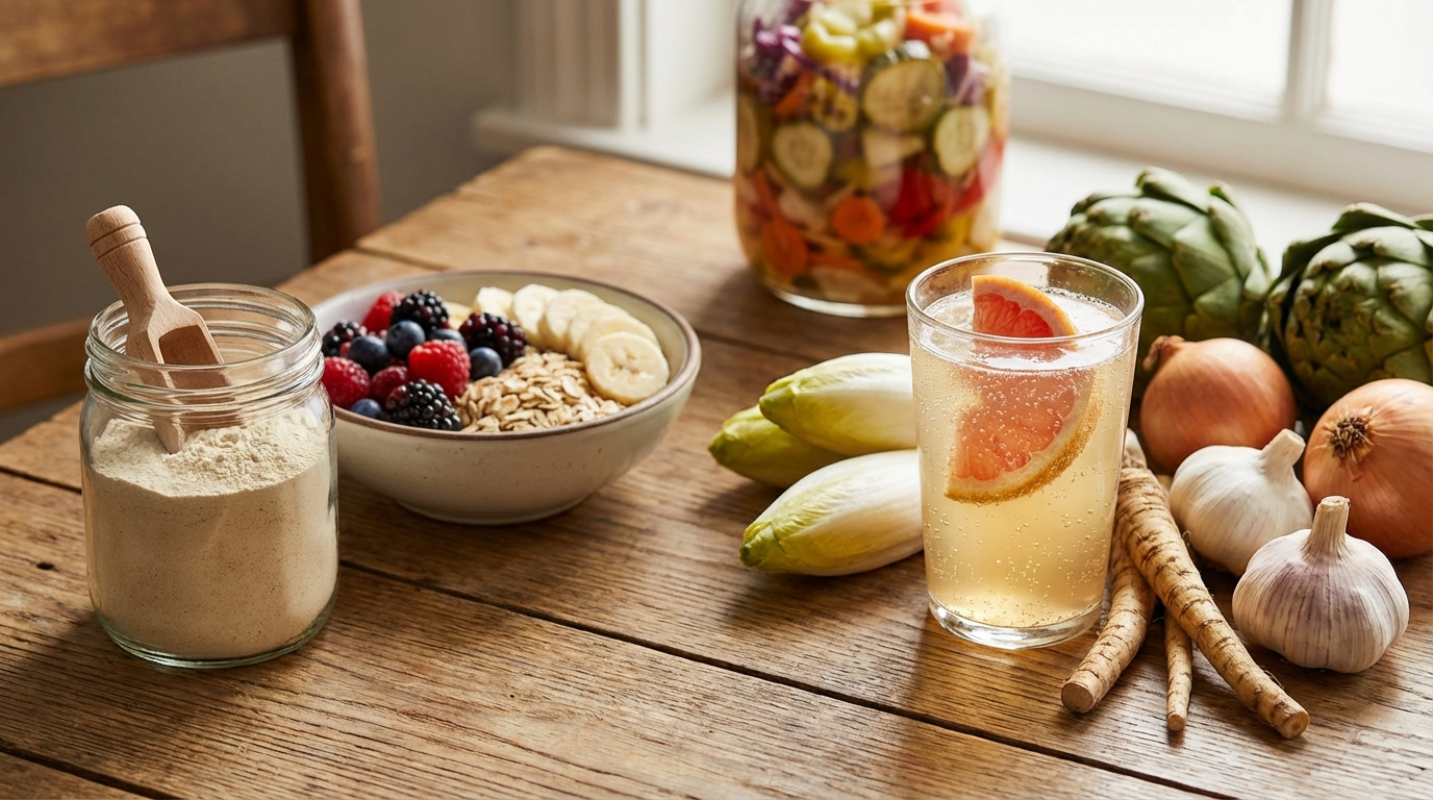
You can get creative with how you sneak these fibers into your life. Have you tried adding a tablespoon of green banana flour to your morning smoothie? You won't even taste it. Or how about cold potato salad? When potatoes are cooked and then cooled, they develop resistant starch that your gut bugs love. Even simple things like adding sliced leeks to your soup or snacking on a slightly under-ripe banana can make a huge difference.
So how do you know if it's actually working? You don't necessarily need an expensive stool test to see progress. Look for the "non-bathroom" signs. Are you sleeping better? Is your skin clearer? Do you find that your afternoon energy slump isn't quite as deep as it used to be? These are all signs that your microbial "city" is becoming more diverse and efficient.
The Global Prebiotic Association updated its guidelines recently to emphasize that a "prebiotic effect" can also come from things like polyphenols in dark chocolate and berries. So, yes, you have permission to eat that square of dark chocolate in the name of science. By combining a high-quality supplement with a diverse diet, you're giving your microbiome the best possible chance to thrive in 2026 and beyond.
This article on zenugen.com is for informational and educational purposes only. Readers are encouraged to consult qualified professionals and verify details with official sources before making decisions. This content does not constitute professional advice.