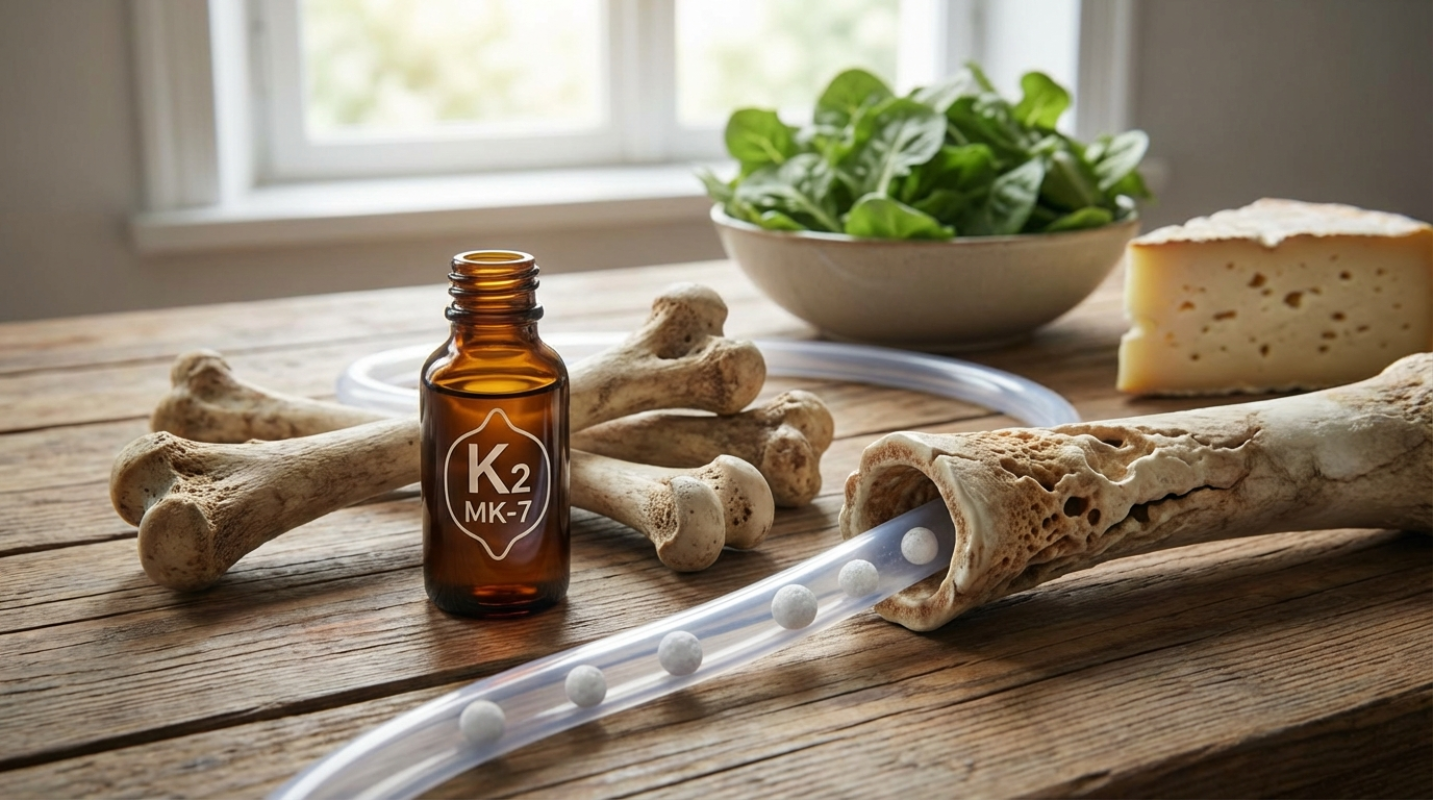
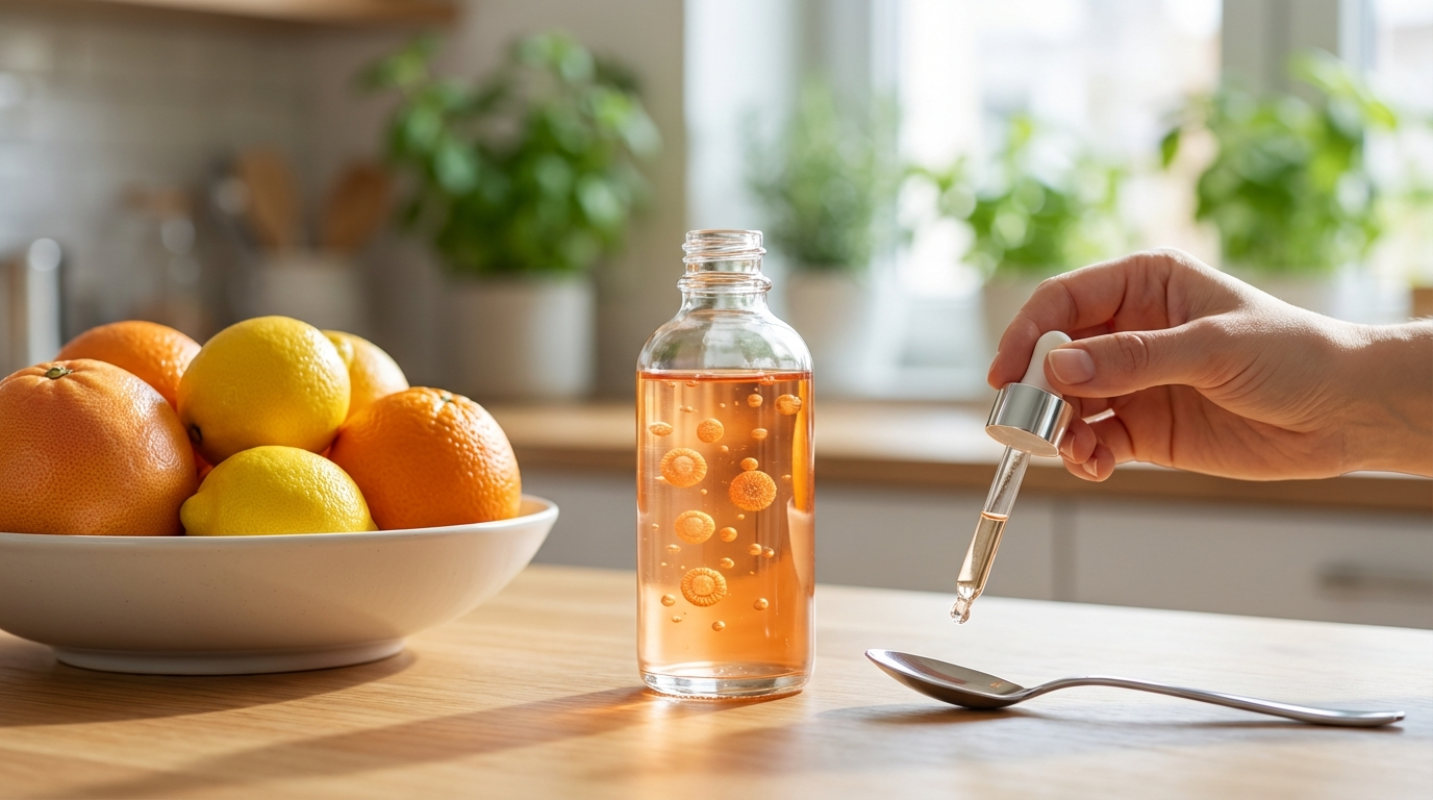
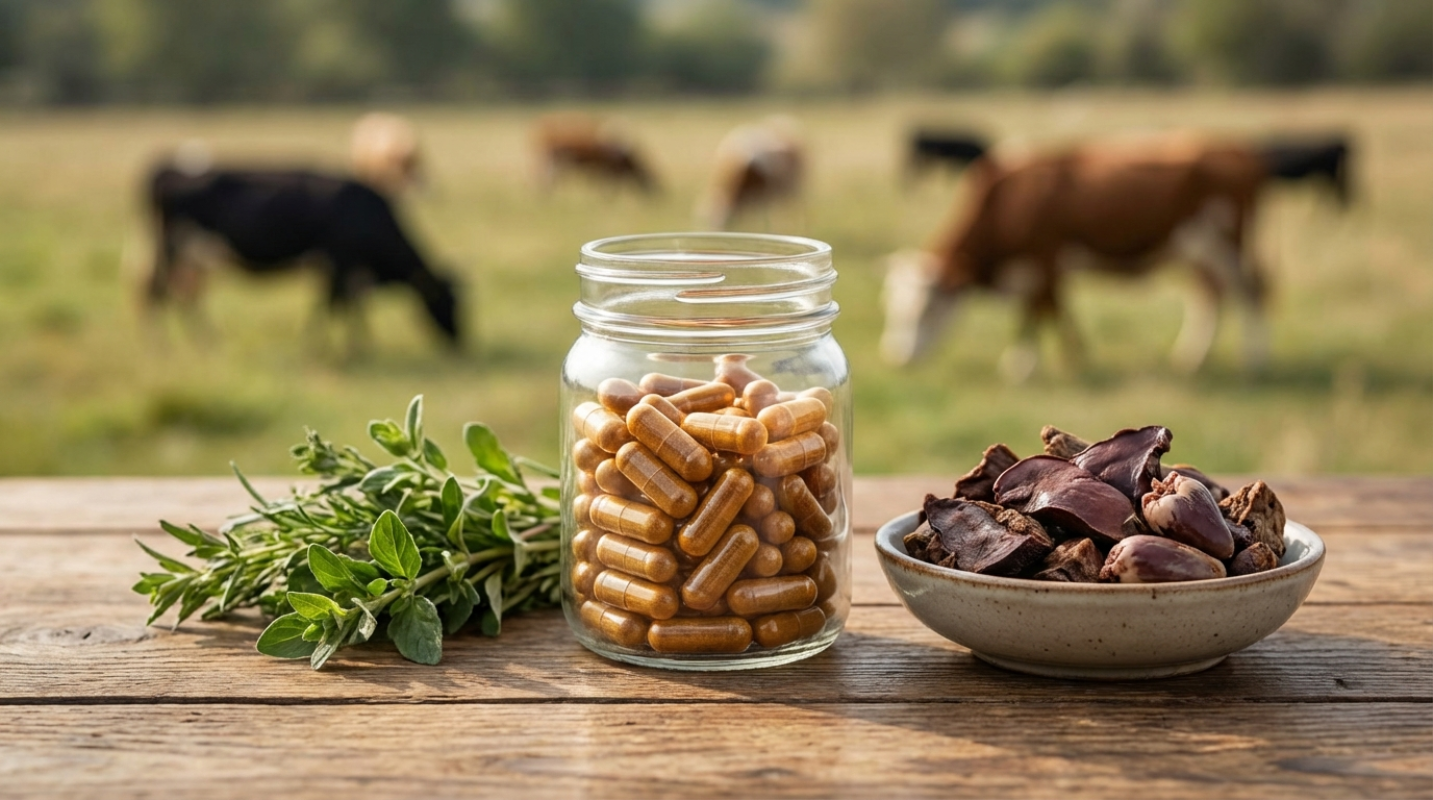
 (Image source: Gemini)
 Have you ever woken up, caught a glimpse of yourself in the mirror, and wondered when your face decided to start a slow motion descent toward your chin? Or maybe you have noticed your knees making a sound like a bowl of Rice Krispies every time you tackle the stairs. It happens to the best of us. This is what many call the "scaffolding" epidemic. Collagen is the primary protein holding your entire operation together, and unfortunately, your body starts cutting the production budget somewhere in your mid twenties.
Think of collagen as the internal glue of your body. It is the most abundant protein you have, providing structure to your skin, hair, nails, bones, and even your gut lining. But as you blow out more candles on your birthday cake, that glue starts to lose its grip. The result is a loss of elasticity in your skin (hello, fine lines) and a degradation of the cartilage in your joints (hello, morning stiffness).
This is where hydrolyzed collagen peptides come into play. They are the bioavailable solution to a problem we all face. Instead of trying to consume massive, indigestible protein chains, we use science to break them down into something your body can actually use. It is a proactive way to manage the aging process rather than just reacting to it once the damage is done.
Decoding the Label What Makes a Collagen Peptide 'Peptide'?
You have probably seen "collagen powder" and "collagen peptides" sitting side by side on a shelf and wondered if there is actually a difference. There is, and it comes down to a process called hydrolysis. In its raw form, collagen is a massive, complex molecule. If you tried to eat it straight, your digestive system would have a hard time breaking it down into anything useful. It is like trying to swallow a whole pizza in one go instead of taking small bites.
Hydrolysis uses enzymes to break down long chains of gelatin into much smaller strands called peptides. Why does this matter? It comes down to molecular weight, which is measured in Daltons. Standard collagen is heavy and hard to absorb. Peptides, but are lightweight and highly bioavailable. Research from 2024 confirmed that hydrolyzed collagen has a 98% digestibility rate. This means that within about an hour of hitting your stomach, these bioactive di-peptides are already appearing in your bloodstream, ready to get to work.
So what does this actually mean for you? It means that peptides are not just "more protein." Although a standard protein powder is great for building muscle, it does not necessarily have the specific amino acid profile or the signaling capabilities required to repair your skin's dermal matrix or your joint's cartilage. Peptides act as messengers. When they enter your system, they trick your body into thinking there is a collagen breakdown, which triggers your fibroblasts (the cells that make collagen) to ramp up production.
The Big Five Peptides Tailored for Your Tissues
Not all collagen is created equal. Your body uses different types of collagen for different jobs. To make it easier to understand, think of the different types of collagen as a specialized construction crew. You would not ask a plumber to fix your roof, and you should not expect Type II collagen to do much for your forehead wrinkles.
1. Verisol (Bioactive Peptides), This is the skin elasticity superstar. It focuses almost exclusively on the dermal matrix. Recent 2025 studies showed that a 2.5g daily dose reduced eye wrinkles by 25% in just eight weeks. It is the "finish carpenter" of the crew, making sure the exterior looks smooth and polished.
2. Fortigel (Type II), This is the cartilage champion. If your joints feel like they need a shot of WD-40, this is what you are looking for. It stimulates chondrocytes, which are the cells responsible for maintaining your cartilage. A 5g daily dose has been shown to reduce joint pain by 45% in active adults.
3. Peptan (Type I and III), These are the all rounders. Type I makes up 90% of your body's collagen and provides structural strength, while Type III is the "youth" collagen that gives skin its bounce. Peptan is particularly effective at increasing skin density and hydration.²
4. Tendoforte, This peptide is highly specific to tendons and ligaments. It is the "structural engineer" that make sures your connective tissues can handle the stress of movement. Clinical trials in 2025 showed that athletes with Achilles issues returned to activity 60% faster when using these peptides alongside their rehab exercises.
5. Mobilee (HA Matrix), This is a bit of a hybrid. It is a matrix of collagen and hyaluronic acid. Although the others build the structure, Mobilee provides the lubrication. It is the "oil" in the engine that keeps your joints moving without friction.
Types V and X are also emerging in the research for their roles in bone health and cell membrane support. Although they are less common in standard supplements, they represent the next frontier of connective tissue support.
Beyond the Scoop Dosage, Timing, and Sourcing for Best Results
If you are going to invest in collagen, you should do it right. The "one size fits all" approach to dosing is officially dead. By 2026, the consensus among nutritionists is that your dose should match your specific goal. If you are strictly looking for a "glow up" and want to improve skin hydration, 2.5g to 5g of bioactive peptides like Verisol is usually enough.
But if you are dealing with joint pain or recovering from an injury, you need to turn the volume up. For joint health, 5g to 10g is the standard clinical dose. If you are using it for muscle recovery or bone density, you might even go as high as 15g daily. Consistency is the most important factor here. You cannot take it once a week and expect your knees to stop clicking. It takes about 8 to 12 weeks of daily use to see and feel a real difference.
Timing also plays a role, though it is simpler than you might think. Many people prefer taking it in the morning coffee because it dissolves easily and does not change the taste. Taking your collagen with a source of Vitamin C is a smart move, as Vitamin C is a necessary co-factor for collagen synthesis. Without it, your body struggles to turn those peptides into new tissue.
Sourcing is the final piece of the puzzle. You have two main choices: bovine (cow) or marine (fish). Bovine collagen is usually a mix of Type I and III, making it great for overall body support. Marine collagen is almost exclusively Type I, which many people prefer for skin health because the molecules are slightly smaller and easier to absorb. Regardless of the source, always look for "grass-fed" or "wild-caught" labels and make sure the product has been third-party tested for heavy metals.
Science Says So Real-World Benefits for Joints and Your Glow-Up
Is this all just marketing hype? The data suggests otherwise. As we move through 2026, the volume of clinical evidence supporting collagen peptides has reached a tipping point. A randomized, double blind study from late 2024 involving 55 participants showed that 10g of hydrolyzed collagen daily led to an 18% reduction in wrinkle depth and a 28% increase in skin hydration after three months. These are not just subjective "I feel prettier" results (measured metrics were used).
On the joint side of things, the results are even more impressive. A 2025 study on patients with knee osteoarthritis reported a 31% reduction in stiffness and pain scores after six months of consistent supplementation. For people who have lived with chronic discomfort, that kind of improvement is life changing. It is the difference between taking the dog for a walk and staying on the couch because it hurts to move.
It is important to address the "too good to be true" skeptics. Collagen is not a miracle cure that will make a 70 year old look 20 again. It will not fix a torn ligament overnight. What it will do is provide your body with the raw materials it needs to maintain and repair itself more efficiently. It is a long term play for better quality of life.
Have you been waiting for a sign to start taking your joint and skin health seriously? This is it. A proactive approach to aging is about giving your body the tools it needs before the scaffolding starts to crumble. Whether you want to run a marathon or just want your skin to look as active as you feel, these five peptides offer a science backed way to support your journey.
This article on zenugen.com is for informational and educational purposes only. Readers are encouraged to consult qualified professionals and verify details with official sources before making decisions. This content does not constitute professional advice.